
The Ultimate Guide to On-Page SEO: A Step-by-Step Approach to Success
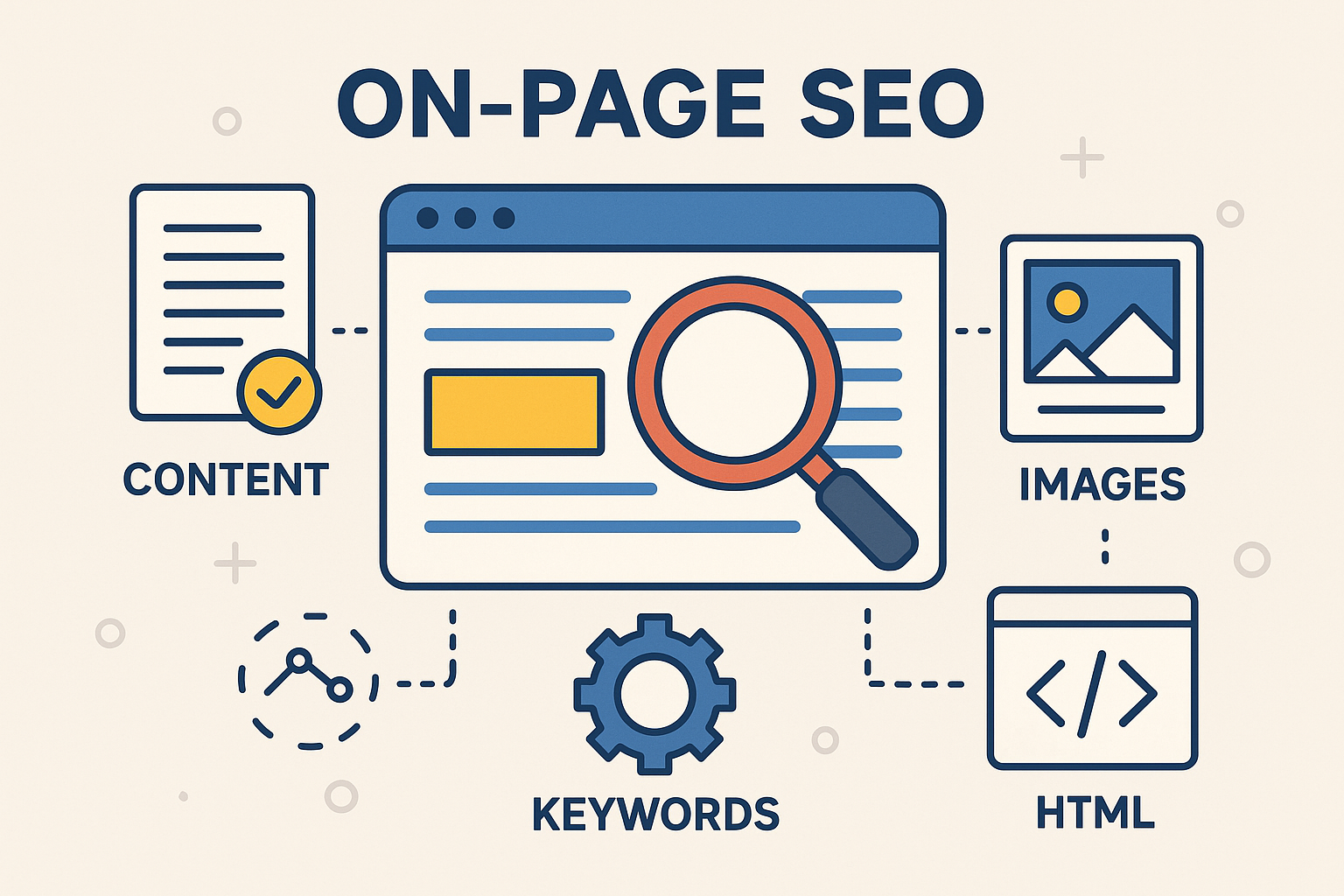
On-page SEO is a crucial component of search engine optimization, focusing on optimizing individual webpages to enhance their visibility and rankings in search engine results. Unlike off-page SEO, which relies on external factors like backlinks, on-page SEO is entirely within your control. This guide provides a detailed, actionable framework to master on-page SEO, helping you improve your rankings, drive organic traffic, and deliver a superior user experience.
What is On-Page SEO?
On-page SEO involves optimizing elements within your webpage—both in terms of content and HTML code—to make it more relevant to search queries and improve user experience. By aligning your page with the best practices of search engines like Google, you can enhance its visibility, attract more visitors, and achieve better engagement.
Why is On-Page SEO Important?
- Boosts Search Rankings: Optimized pages make it easier for search engines to understand your content, improving rankings.
- Enhances User Experience: Well-organized and informative content improves readability and navigation, keeping visitors engaged.
- Increases Organic Traffic: Higher rankings lead to more clicks and visits from search engines.
- Improves Conversions: SEO-friendly pages better align with user intent, resulting in higher conversion rates.
- Cost-Effective: Unlike paid ads, the benefits of on-page SEO are long-term and require minimal ongoing investment.
Step 1: Conduct Keyword Research
Keywords are the foundation of on-page SEO. They help search engines understand your content and match it with relevant user queries.
How to Optimize Keywords
- Primary Keywords:
- Include them in key areas: title tags, meta descriptions, URLs, and the first 100 words of your content.
- Ensure natural integration to maintain readability.
- Secondary Keywords:
- Use related terms (LSI keywords) to provide additional context.
- Long-Tail Keywords:
- Target specific, low-competition phrases with high conversion potential (e.g., “best SEO tools for small businesses”).
- Keyword Density:
- Maintain a density of 1-2%. Avoid keyword stuffing, which can harm rankings.
Step 2: Craft Optimized Title Tags
The title tag is one of the most influential on-page SEO factors. It directly affects your rankings and click-through rates (CTR).
Best Practices for Title Tags
- Primary Keyword Placement: Place your primary keyword near the beginning.
- Character Limit: Keep it under 60 characters to avoid truncation in search results.
- Compelling Language: Use action words or emotional triggers to encourage clicks.
- Avoid Keyword Stuffing: Ensure the title reads naturally.
- Include Brand Name: If applicable, add your brand name at the end.
Step 3: Write Effective Meta Descriptions
Meta descriptions are summaries that appear below the title in search results, influencing CTR.
Tips for Writing Meta Descriptions
- Keyword Usage: Incorporate your primary keyword naturally.
- Character Limit: Stay within 150-160 characters.
- Call-to-Action: Use action-oriented language to prompt clicks.
- Unique Descriptions: Avoid duplicate meta descriptions across pages.
Step 4: Optimize URLs
A well-structured URL improves both SEO and user experience.
Best Practices for URLs
- Keyword Integration: Include your primary keyword in the URL.
- Simplicity: Keep URLs short, descriptive, and free of special characters.
- Consistency: Use lowercase letters and separate words with hyphens.
Step 5: Structure Content with Headings
Headings improve readability and help search engines understand your content hierarchy.
How to Optimize Headings
- H1 Tag: Use it for the main title, ensuring there’s only one per page.
- Subheadings (H2, H3): Break content into logical sections with relevant keywords.
- Hierarchy: Follow a logical structure, e.g., H1 > H2 > H3.
Step 6: Create High-Quality Content
Content is the heart of on-page SEO. It must be valuable, engaging, and aligned with user intent.
Content Optimization Tips
- Focus on Value: Address user needs and solve their problems.
- Natural Keyword Use: Integrate keywords without overloading.
- Enhance Engagement: Use multimedia like images, videos, and infographics.
- Internal Linking: Link to relevant pages to improve site navigation and SEO.
- Regular Updates: Keep your content fresh and relevant.
Step 7: Optimize Images
Images improve user engagement and provide additional SEO opportunities.
Image Optimization Tips
- Descriptive File Names: Name images with keywords (e.g., “on-page-seo-guide.jpg”).
- Alt Text: Use relevant keywords to describe images for accessibility and SEO.
- Compression: Reduce image sizes to improve page load times.
- Responsive Design: Ensure images display well on all devices.
Step 8: Improve Page Speed
Page speed is a critical ranking factor that also impacts user satisfaction.
How to Improve Page Speed
- Minify Code: Compress CSS, JavaScript, and HTML files.
- Enable Caching: Reduce load times for returning users.
- Use a CDN: Distribute content across multiple servers for faster delivery.
- Optimize Hosting: Choose a reliable hosting provider with fast server response times.
Step 9: Ensure Mobile Friendliness
With mobile traffic surpassing desktop, optimizing for mobile is non-negotiable.
Mobile Optimization Tips
- Responsive Design: Ensure your site adapts seamlessly to different screen sizes.
- Test Usability: Use Google’s Mobile-Friendly Test tool to identify issues.
- Simplify Navigation: Make buttons and menus easy to use on small screens.
Step 10: Leverage Schema Markup
Schema markup helps search engines understand your content better and can improve CTR through rich snippets.
How to Use Schema Markup
- Choose Relevant Types: Visit schema.org to find the appropriate markup.
- Use JSON-LD Format: Embed structured data in your HTML.
- Validate: Test your markup using Google’s Structured Data Testing Tool.
Step 11: Build Internal Links
Internal links improve site navigation, distribute link equity, and boost rankings.
Best Practices for Internal Linking
- Relevant Anchor Text: Use descriptive keywords for anchor text.
- Strategic Placement: Link to related, high-value pages.
- Avoid Overlinking: Maintain a clean and user-friendly experience.
Step 12: Monitor and Analyze Results
SEO is an ongoing process. Regularly monitor your performance to refine strategies.
Key Metrics to Track
- Organic Traffic: Analyze visits from search engines using Google Analytics.
- Keyword Rankings: Track progress with tools like SEMrush or Ahrefs.
- Bounce Rate: Identify content or design issues with high bounce rates.
- CTR: Evaluate title and meta description effectiveness.
- Page Load Speed: Use tools like Google PageSpeed Insights for analysis.
Conclusion
On-page SEO is a powerful tool for enhancing your website’s performance, visibility, and user engagement. By following the steps in this guide, you’ll be well on your way to creating optimized pages that rank higher, attract more traffic, and convert visitors effectively. Remember, SEO is a dynamic process—stay updated with trends, monitor your performance, and continually refine your strategies for lasting success. Start implementing these on-page SEO techniques today and elevate your website to new heights!